
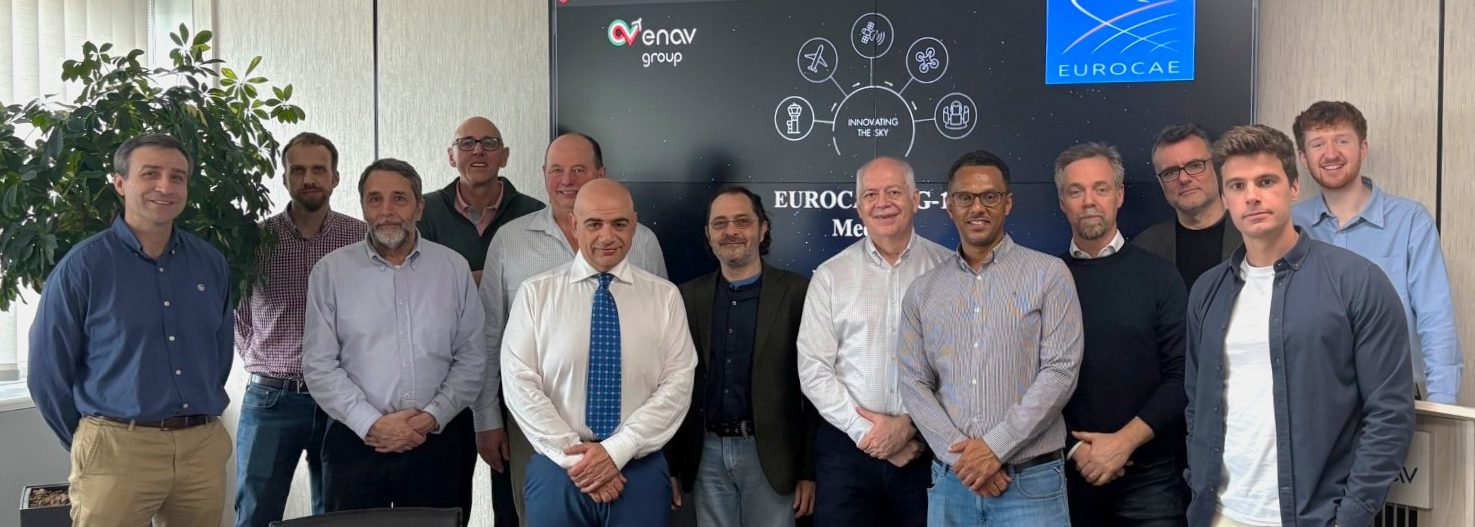
WG-122: Help Shape Europe’s Future Virtual Airspace
WG-122 is developing the standards and deliverables that will enable the Virtual Centre (VC) concept, a key step in the transformation of European Air Traffic Management (ATM).
Europe’s ATM system has evolved as a patchwork of systems shaped by national borders, legacy infrastructure, and local requirements. This fragmentation limits interoperability increases costs and makes it difficult to adapt capacity quickly when traffic patterns change.
The VC concept introduces a modern, harmonised approach to ATM, shifting from isolated systems to a network-centric, service-oriented architecture. This enables air traffic management to become more flexible and efficient across Europe.
In a VC environment, controllers can manage sectors from any connected operations centre. Service providers can share data and tools seamlessly across borders, and capacity can scale dynamically in response to demand. The result is a more resilient, efficient, and sustainable European sky.
Key benefits of Virtual Centres
- Capacity on demand
- Higher cost efficiency
- Lower environmental impact
- Greater business continuity
- More resilient cyber security
- Increased safety and efficiency
WG-122 brings together experts from across the ATM community to create the blueprint for implementing Virtual Centres across Europe.
The mission is to:
- Develop common standards and guidelines that reduce implementation risk
- Support interoperability across borders and service providers
- Enable scalable, cost-efficient adoption of virtualised ATM services
- Align technical work with the European ATM Master Plan and industry needs
This work ensures that the transition toward a network-centric, service-oriented architecture is achieved in a coordinated and future-proof way.
What WG-122 is delivering?
WG-122 is structured in phases:
- Phase 1 (Delivered): Strategy for standardisation
This phase defined what a Virtual Centre is, its benefits, and possible architectural models. It also identified key gaps, proposed a roadmap, and established a blueprint for European-wide deployment. - Phase 2 (Delivered): Templates and common vocabulary
This phase developed a Virtual Centre standardisation strategy and a structured mapping of services supporting that strategy. It ensured alignment with existing frameworks and helped prioritise services for standardisation. - Phase 3 (In progress): Virtual service standardisation
Current work focuses on defining a taxonomy of services for Virtual Centres, along with practical implementation guidelines aligned with the European ATM Master Plan. This includes the development of an interoperability standard for ATM data services, with dedicated sub-standards per service.Deliverables include:
- Virtual Centre – Guidelines for Implementation
- Interoperability Standard for ATM Data Services for Virtual Centres
How you can get involved:
Collaboration is essential to shape Europe’s virtualised ATM future.
You can support or participate in WG-122 by:
- Contributing expertise to ongoing standardisation activities
- Sharing WG-122 outputs within your organisation and network
- Engaging in upcoming workshops and consultations
- Reaching out via the QR code provided here.
WG-122 is currently seeking experts to contribute to this work and help shape the future of interoperable, virtualised ATM services in Europe.
Together, we are building the blueprint for Europe’s next-generation ATM system.
Interested in contributing? Please contact the responsible Technical Programme Manager, Alex Milns.
Find out more here.