
Join WG-135 and Advance the Global CRL Framework for Emerging Aviation Technologies
EUROCAE launched WG‑135 to develop the Certification Readiness Level (CRL) Scale, a new and structured framework designed to help both industry and regulators assess how ready a technology, an organisation, and the associated regulatory pathway are for certification.
While existing frameworks such as TRL, MRL, IRL, and SRL measure technological or manufacturing maturity, none of them address certifiability. As disruptive aviation technologies continue to accelerate, this missing dimension is becoming increasingly significant for the sector.
The Clean Aviation CONCERTO project introduced the first CRL concept, assessing not only the maturity of a technology but also the readiness of organisations, processes, and competencies. WG‑135 will build on this foundation by refining the scale and expanding it into a globally recognised standard, suitable for airworthiness, operations, ATM, and even ICAO‑level applications.
WG‑135 will refine and formalise the Certification Readiness Level framework, incorporating global expert input to enhance the current scale. It will develop a recognised international standard that evaluates certification maturity across technologies, organisations, people, and processes. It will also establish a common language for certification readiness, enabling earlier identification of challenges and better alignment of expectations between industry and regulators
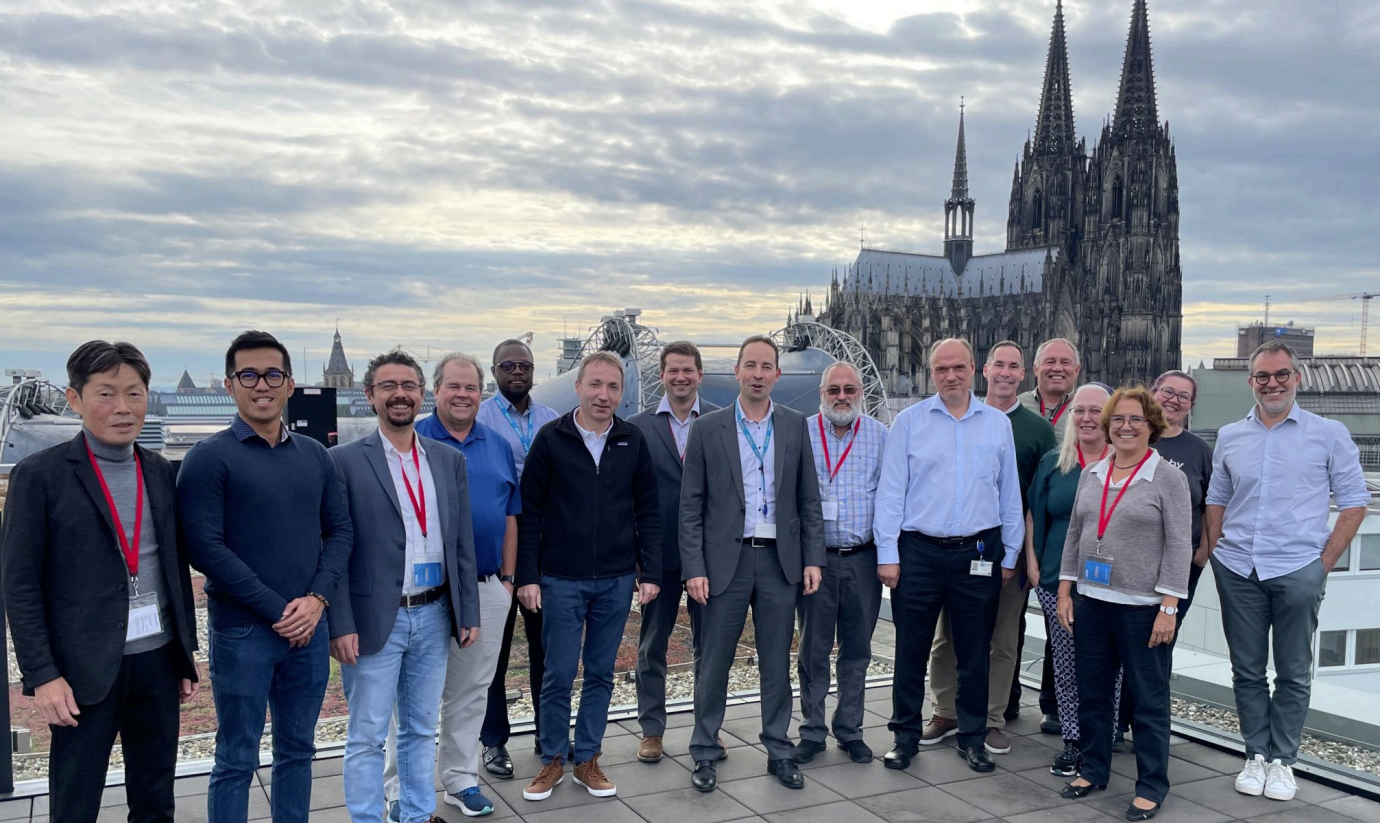
The Working Group, which held its kick-off meeting on 31 March, is seeking experts with backgrounds in certification and rulemaking, safety and system development, emerging aviation technologies, maturity assessment frameworks such as TRL or MRL, as well as regulatory strategy and compliance.
If you are interested, please contact the responsible Technical Programme Manager Atiqah Pillain.
Contribute to WG-126 ATC‑VCS Integration for New Interface Standards
ATC and VCS systems are essential for effective air traffic control. Despite their complementary roles, no standard currently exists for their integration. As air traffic management systems continue to evolve, establishing seamless interoperability between these systems is becoming increasingly important to improve operational efficiency, reduce workload, and enhance safety.
To address this gap, WG-126 is developing a new standard that will support information exchange between the ATM and ATC domains through the definition of common interfaces and communication protocols.
WG-126 is currently seeking subject matter experts, system architects, and end users to contribute to the definition of the REST APIs that will be used on the interface between ATC and VCS systems, including speech recognition patterns.
Desired expertise includes, but is not limited to, ATC operations (air traffic controllers, supervisors, ATC training organisations, service providers, and ANSPs) as well as ATC and VCS systems (developers, architects, communication experts, and flight planners).
EUROCAE particularly encourages participation from women and other underrepresented groups, as increasing diversity within our Working Groups remains an important objective for the organisation.
If you are interested, please contact the responsible Technical Programme Manager Andrea Trimarchi.
WG-117 Aviation Software Standards Seeks Certification and Verification Specialists
Software systems are increasingly central to modern aviation, supporting a growing number of safety-critical functions. As development methodologies evolve and system complexity increases, it is essential that certification guidance remains clear, consistent, and aligned with current industry practices.
To address this need, WG-117 is reopening and updating several key supplements to ED-12C and ED-109A, including ED-215 (Software Tool Qualification Considerations), ED-218 (Model-Based Development and Verification), and ED-94 (Supporting Information for ED-12C and ED-109A). The objective is to improve the quality, clarity, and usability of these documents while addressing known issues and supporting their consistent application across the aviation sector.
WG-117 is seeking experts to contribute to the revision of these standards. Desired expertise includes, but is not limited to, software development, software verification, certification, software tool qualification, model-based development and verification, systems engineering, and statistical methods applicable to software assurance.
The work will focus on improving and clarifying guidance related to software tool qualification, modern model-based development practices, and supporting information for the implementation of ED-12C and ED-109A. The activities are expected to debute during the Working Group plenary meeting in October 2026.
If you are interested in contributing, please contact the responsible Technical Programme Manager, Tri Thuc Nguyen, or register your interest here.